When a car is written off, it doesn’t necessarily mean every component has reached the end of its useful life. Many vehicles are declared beyond economical repair because of accident damage, repair costs or structural problems, even though numerous mechanical parts remain in good condition. Wheel bearings are one component that may still be serviceable, but can they be removed and repurposed safely?
The answer is yes, in certain circumstances. However, wheel bearings require careful assessment before being reused, particularly because they play such an important role in vehicle safety and handling.
Why Might Wheel Bearings Still Be Usable?
A car can be written off for several reasons. Significant bodywork damage, a damaged chassis or expensive electrical faults may make repairs uneconomical, even when some mechanical components have plenty of life left in them.
If a vehicle has suffered damage away from its wheels and suspension, its wheel bearings may be unaffected. For example, a car written off following rear-end damage might have perfectly serviceable bearings on an undamaged front axle.
Repurposing suitable components can reduce waste, support the automotive recycling industry and provide a more affordable source of replacement parts. However, the condition of the individual bearing matters far more than the overall condition of the vehicle.
What Should Be Checked Before Reusing a Wheel Bearing?
Before considering a used wheel bearing for another vehicle, several factors need to be assessed.
Accident damage: If the car has been involved in a collision, it’s important to establish whether the impact could have affected the wheel, hub, suspension or bearing assembly. Even if the bearing looks intact, an impact can cause internal damage that isn’t immediately visible.
Wear and deterioration: Wheel bearings experience continuous rotational forces and carry substantial loads. Over time, their internal rolling elements and raceways can wear, while inadequate lubrication or contamination can accelerate deterioration. Signs of noise, roughness, excessive play or corrosion are reasons to reject a bearing.
Mileage and service history: A bearing from a relatively low-mileage vehicle with a known maintenance history may appear more promising than one from a heavily used car. Nevertheless, mileage alone cannot establish whether a bearing is safe to reuse.
Compatibility: Bearings must match the intended vehicle’s specifications, including dimensions, load capacity and assembly design. Some modern wheel bearing units also incorporate ABS sensors or magnetic encoder rings, making correct compatibility particularly important.
Can a Used Wheel Bearing Be Fitted to Another Car?
In principle, a suitable bearing can be transferred to another vehicle if the component is compatible and its condition has been properly assessed. However, this isn’t always straightforward.
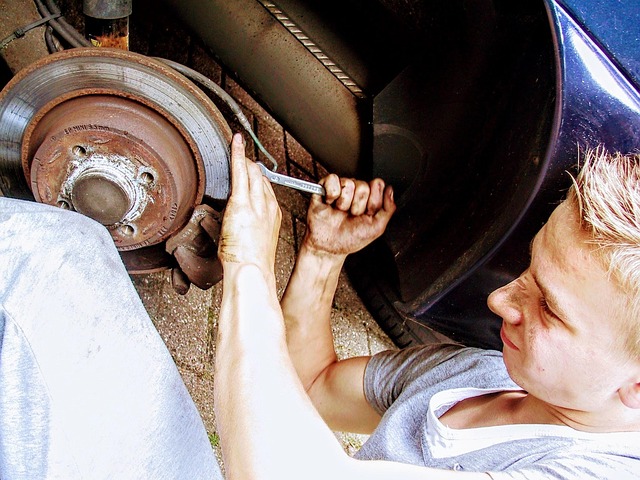
Many modern wheel bearings are supplied as sealed units or integrated hub assemblies. Removing them can require specialist tools, and incorrect extraction or installation can damage the bearing’s internal components. A bearing that appears undamaged after removal may therefore no longer be suitable for use.
There is also an important distinction between reusing a complete bearing assembly and repurposing its materials. Steel recovered from worn or damaged bearings can be recycled, while serviceable components may sometimes be recovered through appropriate automotive recycling processes.
For most motorists, fitting a new bearing or a professionally remanufactured unit from a reputable supplier is generally the more dependable option. The relatively modest saving offered by an unverified used bearing may not justify the uncertainty.
Are There Safety Concerns?
Absolutely. Wheel bearings allow the wheels to rotate smoothly while supporting the vehicle’s weight and handling the forces generated during braking, cornering and acceleration.
A failing bearing can produce humming, grinding or rumbling noises, excessive wheel movement and uneven tyre wear. In severe cases, bearing failure can compromise wheel control and cause further damage to the hub, suspension or braking system.
Because internal damage may not be visible, a simple visual inspection isn’t sufficient to establish that a used bearing is safe. Any assessment should be carried out by a suitably qualified professional, with replacement considered whenever the component’s history or condition is uncertain.
It’s also worth remembering that some bearing designs and vehicle manufacturers specify replacement rather than reuse in particular circumstances. Manufacturer guidance should always take precedence.
A More Sustainable Approach to Automotive Parts
Reusing automotive components can be an effective way to extend their useful life and reduce unnecessary waste. Written-off vehicles often contain valuable parts that remain suitable for recovery, and responsible dismantling helps ensure these resources aren’t discarded unnecessarily.
The key is to distinguish between components that can genuinely be reused and those where safety, wear or uncertainty makes replacement the better decision.
For wheel bearings, the answer depends on the individual component, the circumstances of the vehicle’s write-off and the intended application. A bearing that has escaped damage and meets the necessary condition and compatibility requirements may have further use, but a questionable bearing should never be put back into service simply to save money.
Ultimately, responsible reuse means balancing sustainability and affordability with the need for reliable, safe vehicle operation.
Featured image from Pixabay.